
Even though I sometimes go by the nickname “Tony Stark”, I have always wanted a “Jarvis”. (The autonomous interactive computer that controls whatever electronics I need it to, and communicates with me like a real person with a unique personality.) Even though Jarvis may be far in the future, Milo is not. He will answer your questions and if you make fun of him he blushes and walks away. In fact Milo is just like any other boy his age only with one important difference – he is a computer program. The four-year-old has been unveiled by Microsoft as the world’s first real virtual character who is convincing enough to be considered ‘human’. The player’s voice commands and physical movements are picked up by an infra-red sensor which works with artificial intelligence to interpret the player’s intonation and meaning, and respond accordingly.
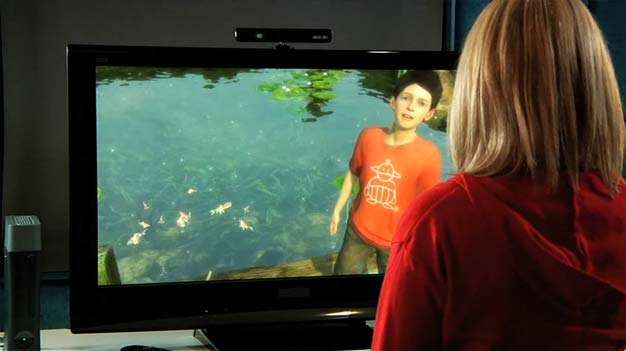
On demonstrations his conversation is utterly believable and he replies to questions just like a real four-year-old. At one point he throws the player a pair of goggles, and so enthralled is she that she bends down to pick them up, even though there is nothing to grab. When asked if he has finished his school project, Milo sulks off with his head down, not looking at the camera to show that he has been chastised. Microsoft claims the game marks a major shift away from joystick-based entertainment and brings Science Fiction into life. And whilst the demonstrations are astonishing, one problem the company has to get over is just how creepy it is. Milo is being designed for use by millions of people and that the more people play the game the smarter he will get – which sounds like a recipe for creating a Lawnmower Man-style nightmare. ‘Milo’ is a story-telling game about a little boy who’s unhappy because his family has moved from London to New England in America and his parents are too busy to listen to what’s on his mind.