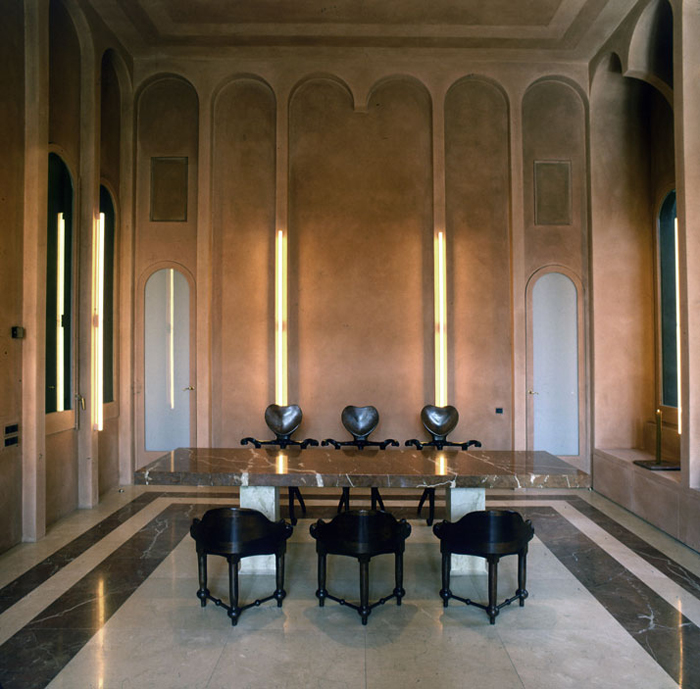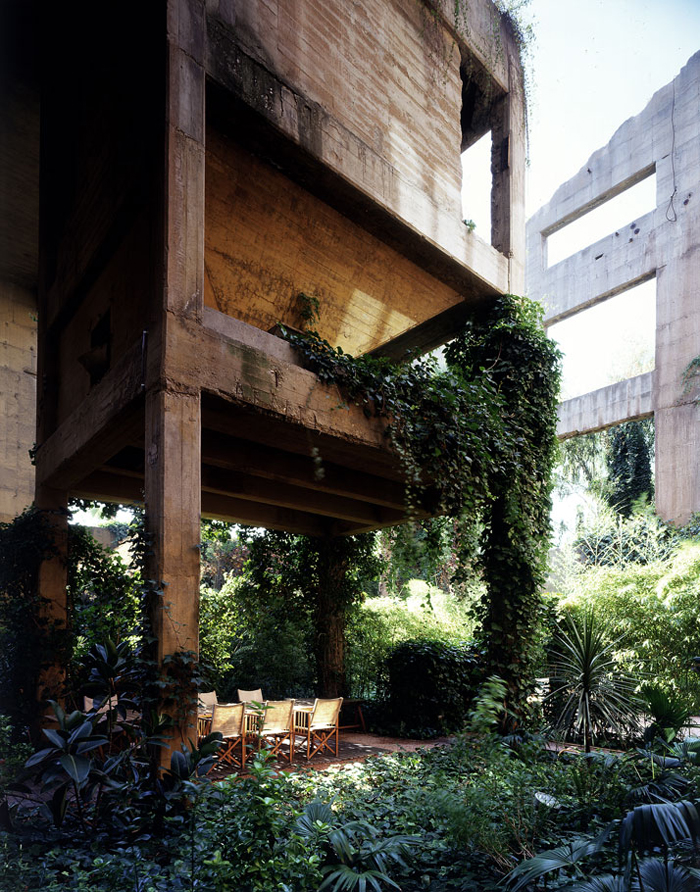
“The Cement Factory” was discovered in 1973, it was an abandoned cement factory and partially in ruins, comprised of over 30 silos, underground galleries and huge engine rooms; Ricardo Bofill bought it and began renovation works. He identified the program; The Cement Factory was to be used as architectural offices, archives, a model laboratory, and exhibition space, an apartment for him, as well as guest rooms and gardens. He defined the space by demolishing certain structures, cleaning cement, exposing previously concealed structures and creating the landscape architecture by planting various plants such as eucalyptus, palms, olive trees and cypresses; renovation works lasted nearly two years.
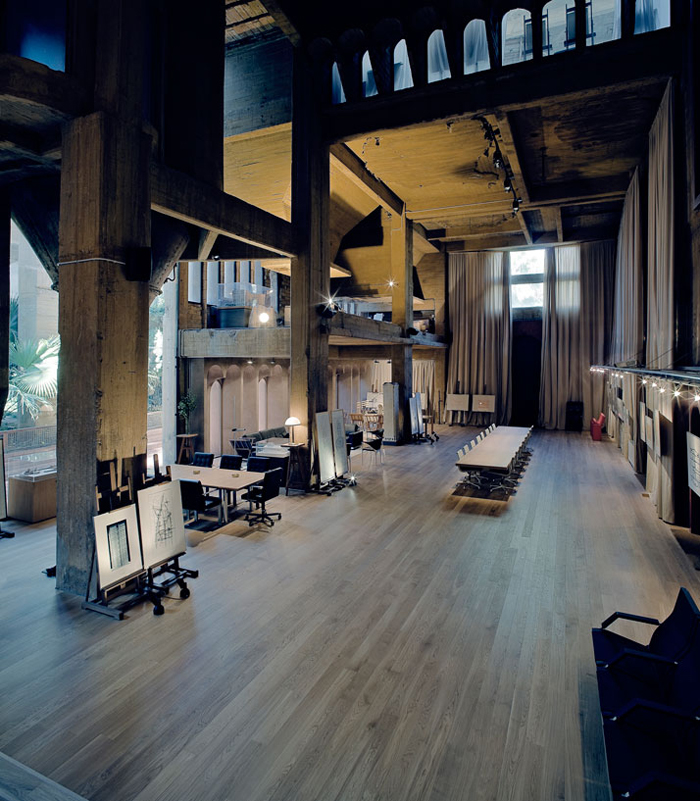
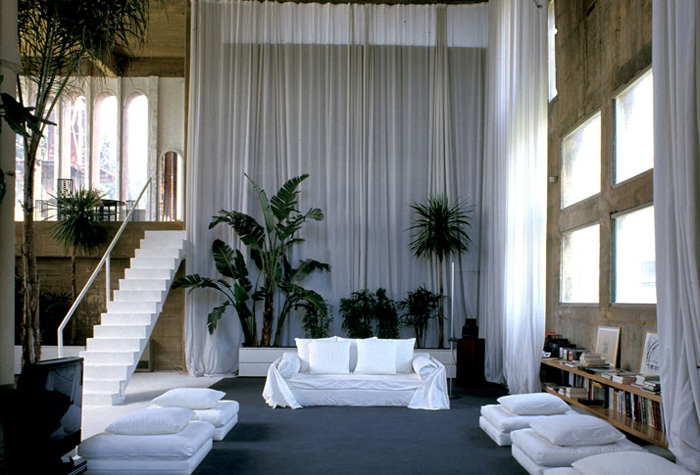
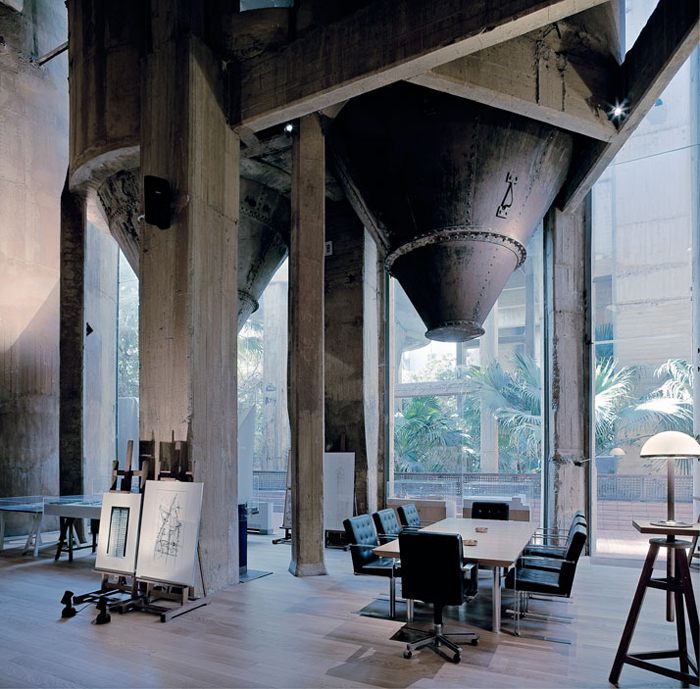
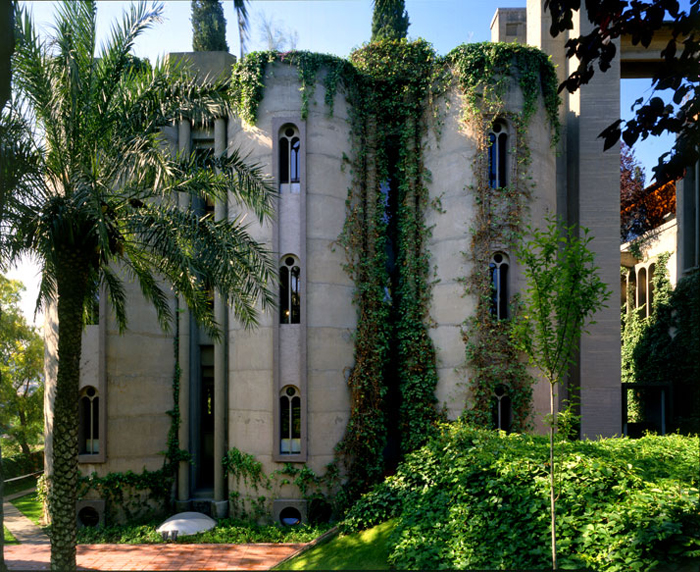
Bofill imagined the future spaces and created a layout according to the different aesthetic and plastic predispositions that had developed since WWI and were present within the factory. A compendium of surrealist elements; paradoxical stairs that climbed to nowhere, the absurdity of certain elements that hung over voids, compelling but useless spaces of strange proportion but magical because of their tension and disproportion. Elements of abstraction; pure volumes which reveal themselves at times broken and impure as well as elements of brutalism; abrupt treatment and sculptural qualities of the materials. Being seduced by the elements of contradiction and the vagueness of the space he decided to preserve the factory and modify the original brutality (due to the coarse of nature and the former program), and sculpt it like a work of art. All these magical elements stand in the midst of transformed gardens which were once the yard of a cement factory.