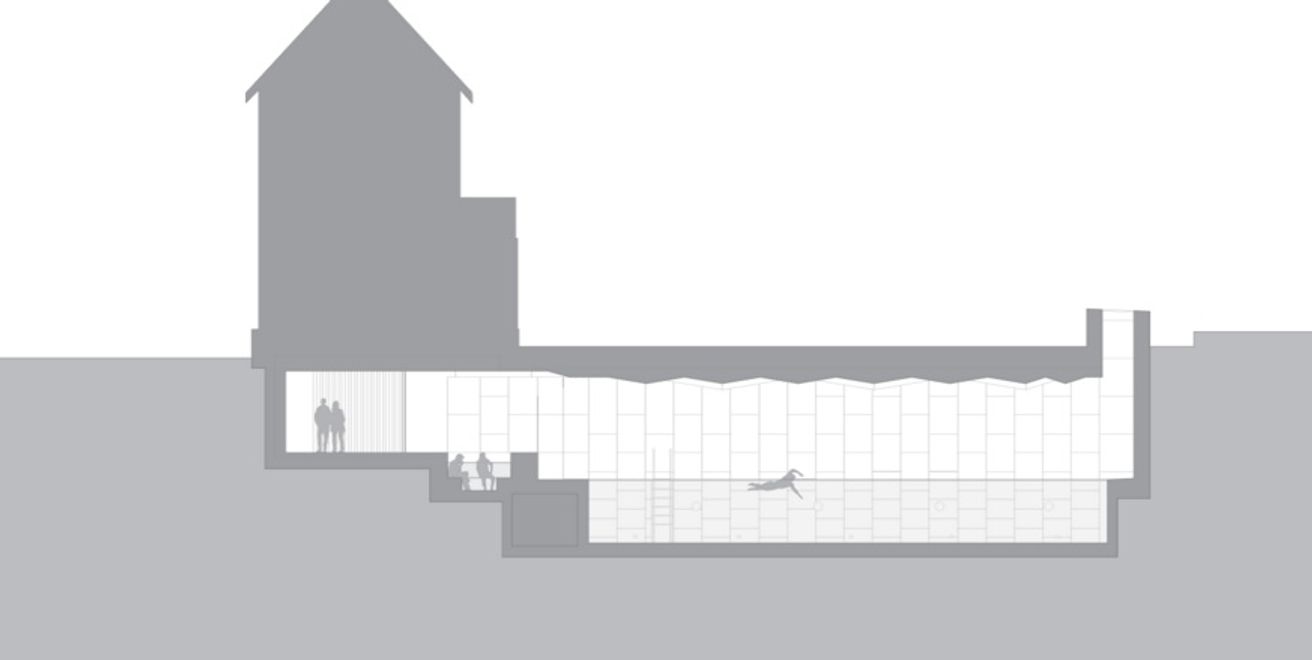
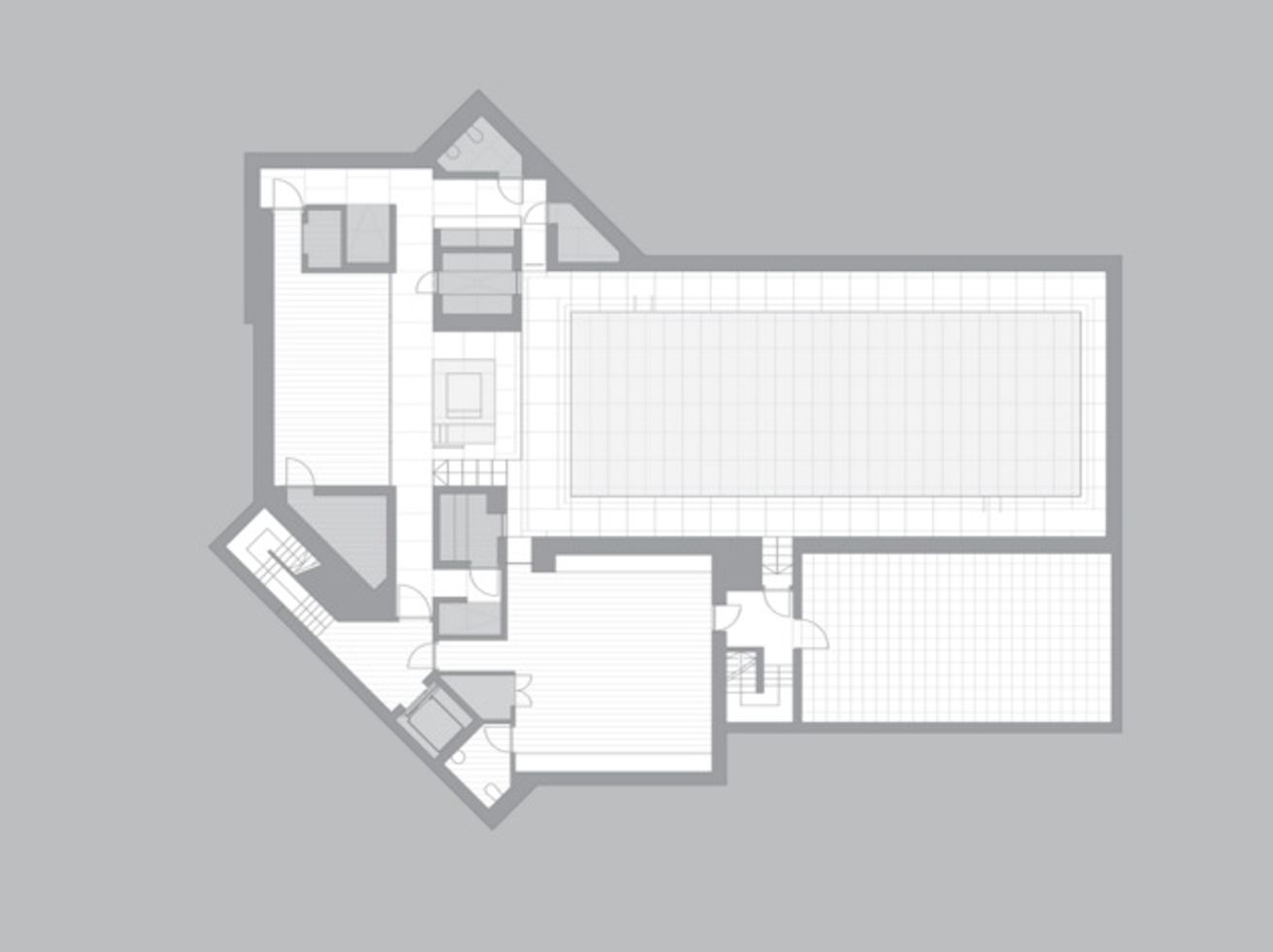
As part of an extensive renovation project involving a 19th-century mansion, a captivating addition emerges beneath the ground—an underground spa. This subterranean sanctuary serves as both a space for physical activity and a haven for relaxation. A labyrinthine network of interconnected rooms lies hidden beneath the ornate facade of the family home above, accessible only through a discreet staircase discreetly tucked away on the ground floor.
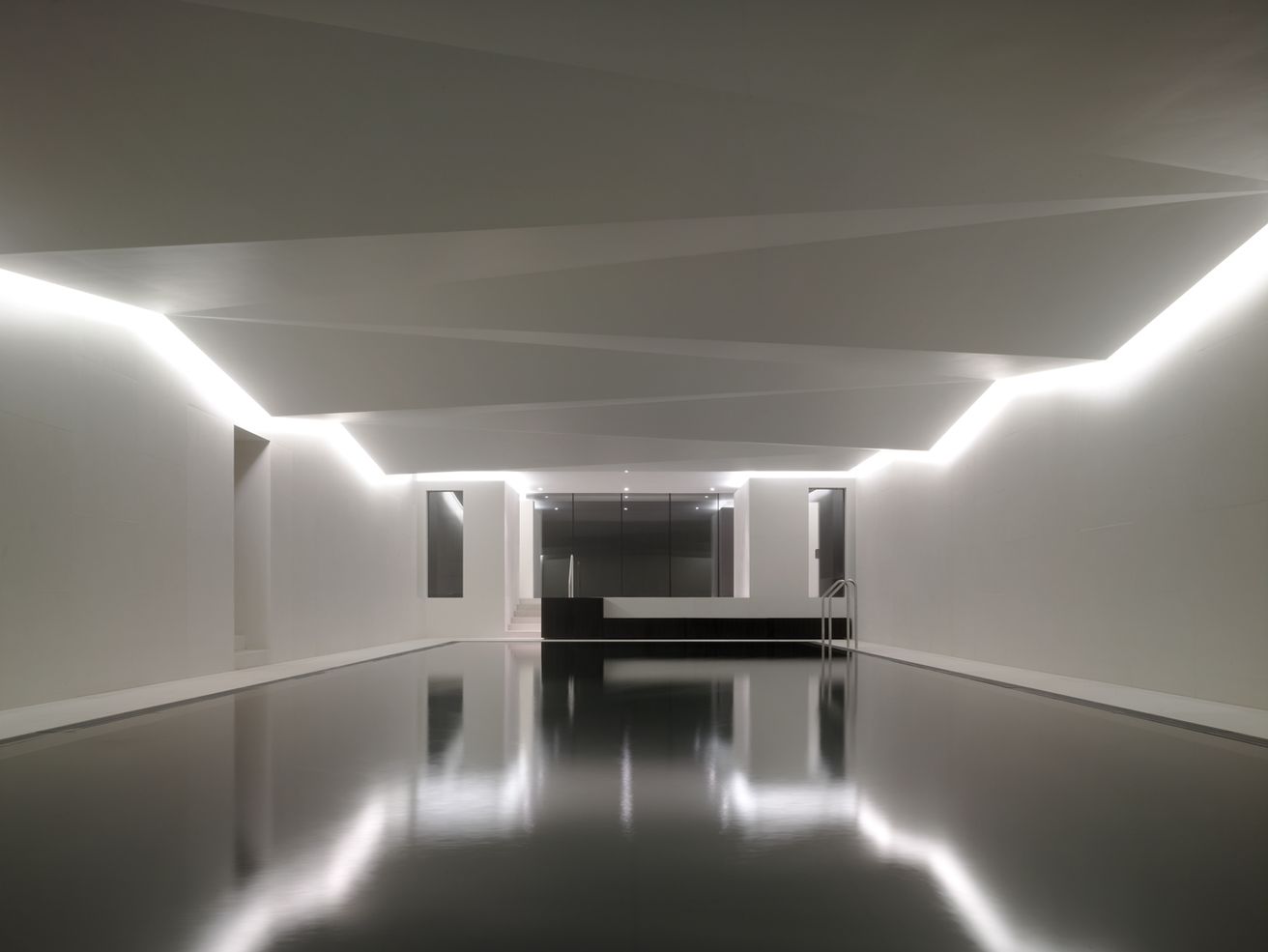
Upon descending into this subterranean realm, visitors are enveloped in an atmosphere defined by simplicity and elegance. The architectural treatment showcases a harmonious blend of natural elements such as stone, plaster, and water, seamlessly juxtaposed against one another. The interplay of natural and artificial lighting further enhances the ambiance, casting subtle shadows and illuminating the space with a soft, inviting glow.

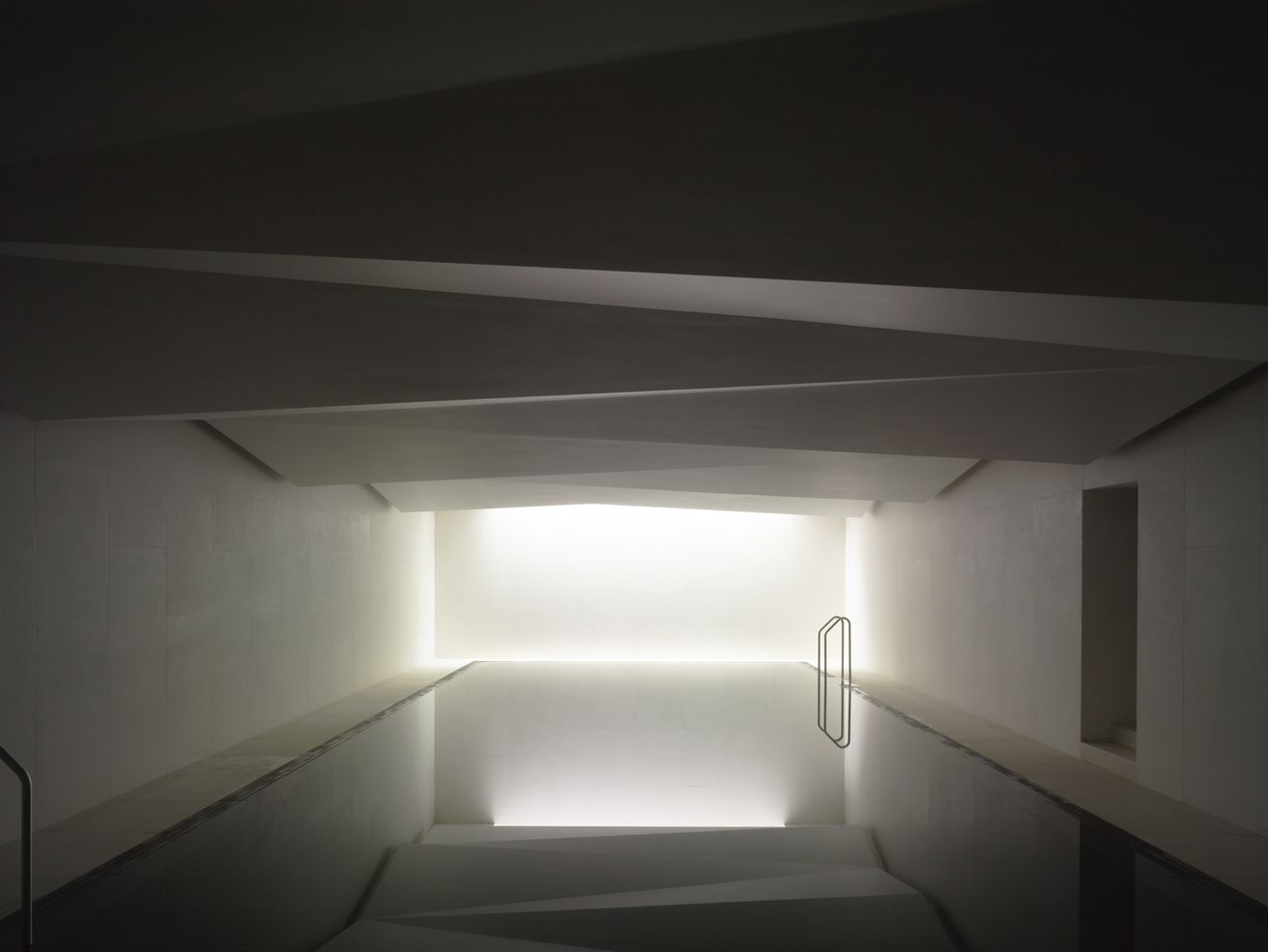
At the heart of the spa lies the pièce de résistance—an impressive 17-meter-long swimming pool. Lined with coarse-textured black basaltina, the pool serves as a striking focal point, its dark hues contrasting beautifully with the smooth, white limestone walls that line the space. Each area within the spa boasts its own unique stone finishes, contributing to the creation of a captivating labyrinth of treatment rooms, including saunas, spas, and gymnasiums.

Above, an undulating plaster ceiling appears to hover gracefully over the pool, its contours accentuated by a halo of indirect light. This architectural feature adds a sense of fluidity and movement to the space, enhancing the overall sense of tranquility and relaxation.
In essence, the subterranean spa represents a masterful blend of architectural innovation and sensory indulgence—an immersive environment where guests can escape the outside world and embark on a journey of rejuvenation and renewal.